Email Tracking Explained is important because email is often assumed to be a private communication channel. In reality, many emails include hidden tracking mechanisms that monitor when messages are opened, where they are opened from, and sometimes what device is used.
These tracking methods are widely used in marketing, sales, and even professional communication. Most users are unaware that simply opening an email can transmit data back to the sender.
This article explains how email tracking works, the technologies behind it, and what users can do to reduce exposure.
Quick Navigation
Why Email Tracking Exists
Email tracking is primarily used to measure engagement. Senders want to know whether messages are opened, links are clicked, and campaigns are effective.
In business contexts, tracking helps prioritize follow-ups. In marketing, it supports targeting and performance analysis. These goals drive widespread adoption of tracking technologies.
To understand how tracking fits into the larger privacy ecosystem, see: Digital Privacy and Online Tracking: How You’re Tracked Online and How to Protect Yourself
Tracking Pixels in Emails
The most common email tracking method is the tracking pixel. This is a tiny, invisible image embedded in an email.
When the email is opened, the image loads from a remote server. This action confirms the open event and may transmit information such as IP address, device type, and time of access.
Because the pixel is invisible, users rarely notice when tracking occurs.
Tracked Links and Click Monitoring
Emails often contain links that pass through tracking servers before redirecting to the final destination. This allows senders to monitor clicks and behavior after the email is opened.
Tracked links can reveal which content interests users and how they interact with follow-up pages.
What Information Email Tracking Collects
Email tracking can collect open time, approximate location, device type, and email client details. Combined over time, this data contributes to behavioral profiling.
When linked to accounts or mailing lists, tracking data can persist long-term and influence future communication strategies.
How Email Tracking Affects Privacy
Email tracking reduces communication privacy by creating visibility into user behavior without explicit consent. Many users are unaware that opening an email triggers data transmission.
This invisibility makes email tracking more invasive than other forms of tracking that are easier to notice.
For context on other non-browser tracking methods, review: Online Tracking Beyond Websites
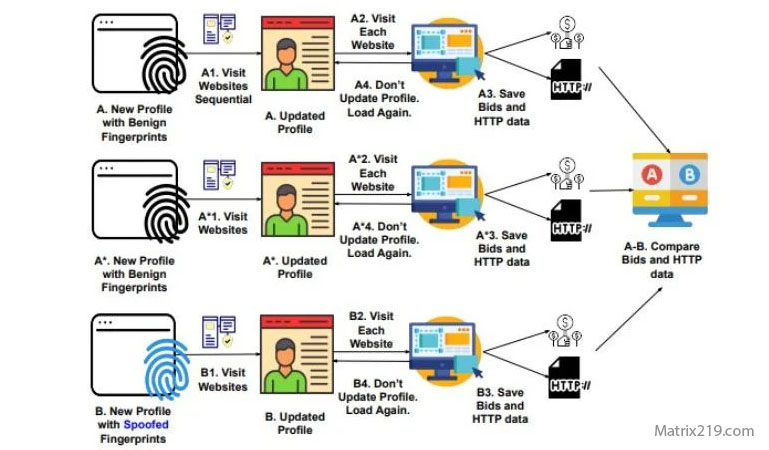
Online Tracking Beyond Websites
How to Reduce Email Tracking
Users can reduce email tracking by disabling automatic image loading, using plain-text email modes, or choosing privacy-focused email services.
Being cautious with marketing emails and newsletters also reduces exposure. These steps do not eliminate tracking but significantly limit it.
For broader reduction strategies, see: How to Stop Online Tracking
FAQ
Can emails track me without clicking anything?
Yes. Tracking pixels can collect data when an email is opened without any further interaction.
Does blocking images stop email tracking?
It stops most pixel-based tracking but does not block tracked links.
Are business emails tracked too?
Yes. Tracking is common in sales, support, and professional communication.
Is email tracking legal?
Legality depends on region and disclosure. Many laws allow it with transparency.
Can email tracking be completely avoided?
Complete avoidance is difficult, but exposure can be significantly reduced.