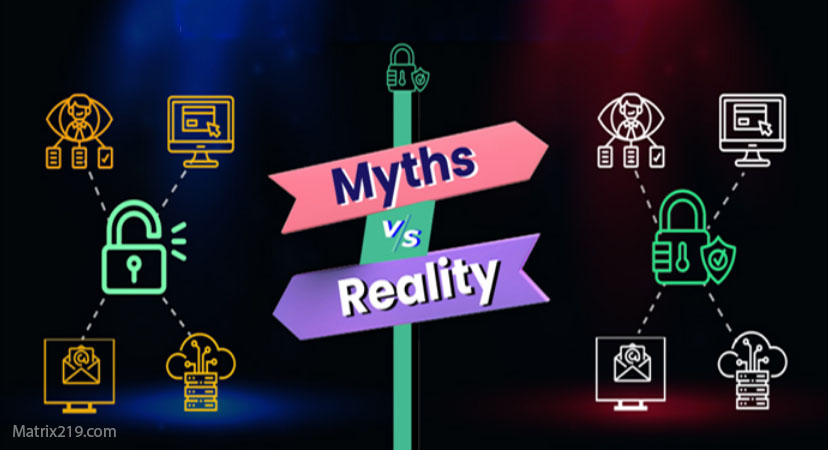
Mobile spyware myths create two dangerous extremes: unnecessary panic and false confidence. Some users believe mobile surveillance is everywhere and unavoidable, while others assume spyware only targets high-profile individuals or requires advanced hacking skills.
Both assumptions can be misleading. Mobile surveillance can range from relatively simple forms of stalkerware installed with physical access to highly sophisticated spyware designed for targeted attacks. Understanding the difference helps users focus on realistic risks instead of either ignoring the problem or assuming every unusual phone behavior means they are being monitored.
This guide examines common mobile spyware myths and replaces them with practical, evidence-based explanations about how phones can be compromised, what warning signs actually mean, and which security habits can reduce exposure.
Quick Navigation
Myth: Spyware Requires Advanced Hacking
Some users believe mobile spyware only appears through zero-day exploits, state-sponsored attacks, or highly advanced hacking techniques.
Reality: Not every form of mobile surveillance requires an advanced exploit. Some stalkerware and malicious applications can be installed when an attacker has physical access to an unlocked device, convinces a user to install an application, obtains account credentials, or abuses excessive permissions.
At the same time, highly sophisticated spyware does exist. Apple describes mercenary spyware attacks as extremely rare and highly sophisticated, while CISA has documented mobile attacks involving phishing, malicious applications, and spyware.
The important distinction is that mobile spyware is not one single type of threat. The required level of technical sophistication depends on the attacker, the target, the device, and the method being used.
- For more examples of how mobile devices can be compromised, see How Phones Get Hacked.
Myth: Antivirus Apps Guarantee Protection
Security applications can make users feel that their phones are fully protected against spyware and other threats.
Reality: Security software can help detect certain malicious applications and known threats, but it is not a complete solution for every form of surveillance.
A security scan may not address a compromised cloud account, stolen credentials, excessive account access, malicious configuration, or someone who has legitimate access to the device or account. On supported platforms, built-in security features such as Google Play Protect and Apple’s security protections provide additional layers, but no single security tool should be treated as a guarantee.
Mobile security works best as a layered process that combines device protection, account security, software updates, careful app installation, and permission management.
- See Mobile Device Security for broader protection practices.
Myth: iPhones Can’t Be Spied On
Apple’s strong security model leads some users to assume that an iPhone cannot be monitored or compromised.
Reality: iPhones are protected by multiple security mechanisms, but they are not immune to every form of surveillance or compromise.
Monitoring can involve compromised Apple Account credentials, unauthorized access to accounts or backups, device management or configuration profiles in certain circumstances, malicious applications, social engineering, or highly sophisticated targeted attacks.
Apple also provides Lockdown Mode specifically for the small number of users who may face highly sophisticated targeted attacks. Apple states that most people are never targeted by this type of spyware.
The platform therefore affects the available attack paths and security controls, but it does not make the device completely immune to surveillance.
- For a platform-specific comparison, see Android vs. iPhone Spyware.
Myth: Battery Drain Always Means Spyware
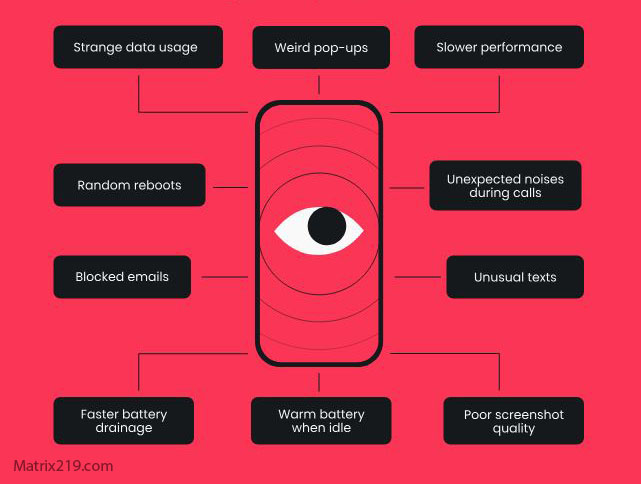
Unusual battery drain is often interpreted as evidence that spyware is running in the background.
Reality: Battery drain has many possible causes, including battery aging, background applications, poor cellular reception, system updates, high screen usage, location services, and configuration problems.
Spyware can sometimes affect device behavior, but battery drain by itself is not reliable evidence of spyware.
A more useful approach is to look for multiple indicators together, such as unexplained account activity, unexpected applications or configuration changes, unusual data usage, unauthorized access, or someone knowing information they should not have access to.
FTC guidance on stalkerware also notes that unusual battery or data usage can be one possible indicator, but detection should not depend on a single symptom.
Myth: A Factory Reset Solves Everything
A factory reset is often treated as a universal solution for a compromised phone.
Reality: A factory reset can remove many application-level threats by erasing the device and returning it to a clean software state. However, it does not automatically secure compromised online accounts, stolen credentials, or information that an attacker already obtained.
If an account remains compromised, simply resetting the phone does not prevent the attacker from accessing that account again. Account passwords, recovery methods, authentication settings, and connected sessions may also need to be reviewed and secured.
Care is also required when restoring applications and backups. If the original problem involved a malicious application or compromised account, blindly restoring everything can recreate some of the original risks.
- For a more detailed explanation, see When a Factory Reset Works and When It Doesn’t.
Myth: Only Strangers Spy on Phones
People often imagine an anonymous hacker as the main person capable of monitoring a phone.
Reality: Some forms of phone surveillance involve someone the victim already knows. A partner, former partner, family member, coworker, or another person with previous access to the device or account may have more practical opportunities to install monitoring software or obtain credentials.
The FTC specifically warns that stalkerware can be used by abusive partners or ex-partners to monitor a person’s location, communications, and online activity.
This is one reason physical access, device passcodes, account credentials, and recovery information are important parts of mobile security.
Only Strangers Spy on Phones
Myth: Spyware Is Always Illegal
Some users assume that every form of device monitoring is automatically illegal.
Reality: The legal status of monitoring depends on the jurisdiction, the circumstances, consent, ownership of the device, the purpose of monitoring, and how the information is collected or used.
Some legitimate technologies can provide device management, parental controls, or enterprise administration. However, the same types of capabilities can be abused to monitor someone without meaningful consent.
Legal status should therefore be assessed according to the applicable local law and the specific circumstances. Something being technically available or marketed as a monitoring feature does not automatically make its use lawful or ethical.
Myth: More Security Tools Mean More Protection
Installing multiple security applications can feel like a proactive way to improve protection.
Reality: More tools do not automatically provide better security. Multiple applications can create unnecessary notifications, duplicated functionality, configuration conflicts, and confusion about which security controls are actually active.
A smaller number of trusted tools, combined with strong device and account security practices, is often easier to maintain and understand.
- For the fundamentals of protecting mobile applications and devices, see Mobile App Security.
What Actually Increases Spyware Risk
- Giving other people unsupervised access to an unlocked device.
- Using weak, reused, or shared passwords.
- Installing applications from untrusted sources.
- Installing cracked or modified applications.
- Granting applications unnecessary permissions.
- Ignoring operating system and security updates.
- Failing to secure important cloud accounts.
- Using the same credentials across multiple services.
- Ignoring unexpected account activity or security alerts.
These factors do not prove that spyware is present, but they can increase opportunities for unauthorized access or make compromise more difficult to detect and recover from.
What Actually Reduces Spyware Risk
- Keep your phone’s operating system and applications updated.
- Use a strong device passcode and do not share it unnecessarily.
- Use strong, unique passwords for important accounts.
- Enable multi-factor authentication where available.
- Install applications from trusted sources and review their permissions.
- Remove applications you no longer need or do not recognize.
- Review account security and active sessions regularly.
- Limit unnecessary access to your physical device.
- Learn how your phone handles device management and configuration profiles.
- Use additional protections such as Apple’s Lockdown Mode only when your threat model justifies them.
The goal is not to eliminate every theoretical threat. It is to reduce the most realistic attack paths and make unauthorized access harder.
Why Spyware Myths Are Dangerous
Myths can distract users from meaningful security actions. Fear-based claims can lead to unnecessary panic, while reassuring claims can create false confidence.
For example, assuming that every battery problem means spyware can cause unnecessary resets or purchases of questionable security products. On the other hand, assuming that an iPhone or antivirus application makes surveillance impossible can cause users to ignore genuine account or device-security problems.
Replacing these assumptions with a realistic threat model allows users to investigate unusual behavior calmly and prioritize the risks that actually matter.
Frequently Asked Questions (FAQ)
Is spyware really common?
Mobile spyware exists in several forms, but the risk is not the same for every user. Everyday users may encounter malicious applications, stalkerware, phishing, or account compromise, while highly sophisticated spyware is generally associated with more targeted attacks.
Should I be constantly worried about spyware?
No. Constant worry is not a useful security strategy. Keeping your device updated, protecting your accounts, controlling app permissions, and paying attention to meaningful security indicators provides a more practical approach.
Are all monitoring apps spyware?
No. Some monitoring and management technologies have legitimate uses, including parental controls and enterprise device management. The circumstances, purpose, permissions, and consent involved are important when evaluating whether monitoring is appropriate or abusive.
Can an iPhone be infected with spyware?
Yes. iPhones have strong security protections, but they are not completely immune to surveillance or compromise. Risks can include compromised accounts, unauthorized device access, malicious software, configuration or management issues, and highly sophisticated targeted attacks.
Does battery drain mean my phone has spyware?
Not by itself. Battery drain has many common causes. It becomes more meaningful when combined with other unexplained indicators, such as unexpected account activity, unfamiliar applications, unusual data usage, or evidence that another person has access to information they should not know.
Does a factory reset remove spyware?
A factory reset can remove many application-level threats, but it does not automatically secure compromised accounts or reverse information that has already been stolen. After a suspected compromise, account security and careful restoration are also important.
What is the best mindset for mobile privacy?
An informed and proportional mindset is more useful than either fear or denial. Understand the realistic threats to your device, protect your accounts, keep your software updated, control application permissions, and investigate unusual behavior based on multiple indicators rather than a single symptom.