Many users assume that enabling disk encryption automatically protects all their files in every situation. In reality, File Encryption vs Disk Encryption represents a critical distinction that directly affects how data is protected once it leaves a device. In 2026, files are constantly shared, synced, emailed, and uploaded to cloud platforms, making it essential to understand where each type of encryption starts and where it stops.
This article explains the practical differences between file-level encryption and disk-level encryption, focusing on real-world behavior rather than theory. You will learn how each method works, what threats they address, where they fail, and why relying on disk encryption alone often creates security gaps. Understanding this comparison helps you choose the right protection strategy based on how your files are actually used.
Quick Navigation
What Disk Encryption Really Protects
Full-Device Data Protection
Disk encryption secures all data stored on a physical drive by encrypting the entire storage volume.
Protection Ends at the Device Boundary
Once a file is copied off the encrypted disk, disk encryption no longer applies.
Common Disk Encryption Use Cases
Disk encryption is ideal for protecting laptops, desktops, and mobile devices from physical theft.
What File Encryption Protects
File-Level Data Security
File encryption encrypts individual files, keeping them protected regardless of where they are stored or transferred.
Persistent Protection Beyond Devices
Encrypted files remain unreadable even when emailed, uploaded, or copied to external drives.
A conceptual overview is available in What Is File Encryption and Decryption?
Key Differences Between File and Disk Encryption
Scope of Protection
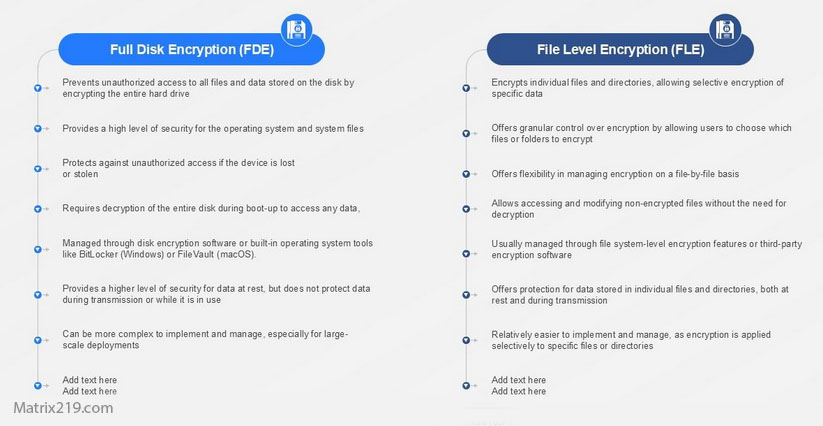
Disk encryption protects everything on a device, while file encryption protects selected files individually.
Behavior During File Sharing
File encryption continues protecting data after sharing, disk encryption does not.
Key Ownership and Control
File encryption often gives users direct control over keys, while disk encryption may rely on system credentials.
File Encryption vs Disk Encryption
Real-World Scenarios Where Disk Encryption Falls Short
Cloud Uploads and Syncing
Files uploaded from an encrypted disk are usually stored unencrypted in the cloud unless file encryption is applied first.
Email Attachments and Transfers
Disk encryption does nothing once files are sent as attachments.
External Drives and USB Media
Copying files to removable media removes disk-level protection entirely.
These risks are often misunderstood and lead to exposure despite “encrypted devices.”
When Disk Encryption Is the Right Choice
Protecting Lost or Stolen Devices
Disk encryption is highly effective against unauthorized access to powered-off devices.
Simplicity and Low Maintenance
Once enabled, disk encryption typically requires minimal ongoing management.
When File Encryption Is the Better Option
Protecting Sensitive Files Individually
Legal documents, financial records, and personal data benefit from persistent file-level protection.
Secure File Sharing
File encryption ensures data remains protected across networks and platforms.
Compliance and Data Handling Policies
Many regulations require encryption that remains effective beyond device boundaries.
A broader decision framework is discussed in Best File Encryption and Decryption Software in 2026 (Complete Guide)
Using File and Disk Encryption Together
Layered Security Approach
Disk encryption protects the device, while file encryption protects the data itself.
Avoiding Redundant Assumptions
Relying on one method alone often leaves gaps in real-world workflows.
Practical Combination Strategy
Encrypt sensitive files individually, then store them on encrypted devices for maximum coverage.
This layered model reduces risk without unnecessary complexity.
Common Misconceptions About Disk Encryption
“My Files Are Safe Because My Laptop Is Encrypted”
This is only true while files stay on the device.
“Disk Encryption Covers Cloud Storage”
It does not. Cloud platforms receive decrypted files unless file encryption is applied first.
These misunderstandings frequently appear in Common File Encryption Mistakes to Avoid.
How Standards View File vs Disk Encryption
Security guidance typically treats disk encryption as device protection and file encryption as data protection. Many evaluation frameworks align with NIST encryption standards when assessing whether encryption remains effective after data transfer.
Frequently Asked Questions (FAQ)
Is disk encryption enough for most users?
It protects devices, but not files once they are shared or uploaded.
Can file encryption replace disk encryption?
No. File encryption protects data, while disk encryption protects the device.
Does file encryption slow down systems more?
Not necessarily. Performance impact depends on file size and configuration.
Should businesses use both?
Yes. Layered encryption provides stronger real-world protection.
Which is more important for cloud storage?
File encryption, because disk encryption does not extend to cloud platforms.