ICS malware represents one of the most dangerous categories of cyber threats to critical infrastructure. Unlike conventional malware that targets data or user devices, malware designed for Industrial Control Systems is built to interact with physical processes—often quietly, slowly, and with long-term objectives.
What makes ICS malware especially concerning is not just its impact, but its stealth. These threats are engineered to blend into operational environments, evade detection, and persist for extended periods without triggering alarms. This article explains how ICS malware spreads, why it is difficult to detect, and how it exploits weaknesses unique to industrial environments.
Quick Navigation
What Makes ICS Malware Different From Traditional Malware
ICS malware is designed with operational awareness.
Key differences include:
-
Understanding of industrial protocols
-
Awareness of physical process timing
-
Ability to manipulate control logic
-
Minimal footprint to avoid detection
These characteristics allow it to operate effectively in environments affected by industrial control system security failures
Common Entry Points for ICS Malware
Initial Access Through IT Networks
Many ICS malware campaigns begin in IT environments through:
-
Phishing emails
-
Compromised credentials
-
Exploited internet-facing services
Once inside IT systems, attackers attempt to pivot into OT networks, expanding critical infrastructure cybersecurity risks
Remote Access Exploitation
Remote access tools provide attractive entry points when:
-
Authentication is weak
-
Sessions are poorly monitored
-
Vendor access is overprivileged
This pathway reinforces the dangers discussed in remote access risks in energy infrastructure
Supply Chain Injection
Malware may be introduced via:
-
Software updates
-
Firmware packages
-
Engineering tools
Because these sources are trusted, malicious code often bypasses defenses, aligning with supply chain cyber risks in power utilities
How ICS Malware Maintains Persistence
Living Off the Land Techniques
ICS malware often uses legitimate tools and functions already present in the environment. This allows it to:
-
Avoid introducing new binaries
-
Blend into normal operations
-
Reduce forensic visibility
Manipulation of Control Logic
Rather than disrupting systems immediately, malware may:
-
Modify PLC logic incrementally
-
Alter sensor readings
-
Suppress alarms
These changes can remain unnoticed for long periods.
Limited Logging and Visibility
Many ICS environments:
-
Generate minimal logs
-
Lack centralized monitoring
-
Do not support endpoint security agents
This lack of visibility complicates detection and delays response, increasing confusion between power grid failure vs cyberattack
Why Detecting ICS Malware Is So Difficult
ICS malware avoids detection by:
-
Operating within normal operational ranges
-
Triggering effects only under specific conditions
-
Mimicking legitimate operator actions
As a result, incidents may only become visible after physical anomalies occur.
When detection finally happens, determining responsibility is challenging and ties directly into cyberattack attribution challenges
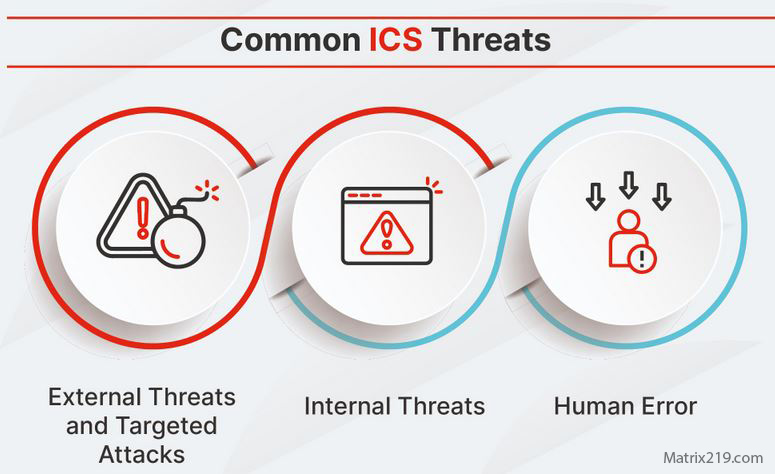
ICS malware in critical infrastructure
ICS Malware and Nation-State Capabilities
Developing effective ICS malware requires:
-
Deep system knowledge
-
Extensive testing environments
-
Long-term intelligence gathering
These requirements mean such malware is most often associated with state-sponsored cyber operations explained
Containing ICS Malware Without Causing Outages
Response to ICS malware must be cautious.
Effective containment includes:
-
Isolating affected segments without full shutdown
-
Verifying control logic integrity
-
Coordinating IT and OT response teams
-
Using offline backups for restoration
These practices are core elements of critical infrastructure cyber defense strategies
Why ICS Malware Changes Risk Calculations
The presence of ICS malware changes how risk is evaluated:
-
Impact extends beyond data loss
-
Recovery timelines increase significantly
-
Public safety and trust are affected
This makes prevention, visibility, and preparedness more critical than ever.
Conclusion
ICS malware represents a highly specialized and dangerous threat to critical systems. Its ability to spread quietly, persist undetected, and manipulate physical processes makes it fundamentally different from traditional cyber threats.
Understanding how ICS malware operates is essential for recognizing early warning signs, responding effectively, and preventing technical weaknesses from turning into large-scale infrastructure disruptions.