If your phone has already been compromised, following the correct phone hacked recovery steps — and in the right order — can mean the difference between full recovery and permanent account loss.
Many guides offer generic advice, but real recovery depends on your platform (Android or iPhone), how deep the compromise goes, and whether attackers already control your email or cloud accounts.
This step-by-step recovery guide is designed for action, not theory. You’ll learn how to regain control on Android and iPhone, secure Gmail or Apple ID, clean or reset the device safely, and decide what to do when recovery doesn’t work.
Each step is ordered to reduce risk, avoid common mistakes, and keep you within legal and ethical boundaries.
Quick Navigation
Step 1: Confirm the Type of Phone Compromise Before Recovery
Before starting any phone hacked recovery steps, you must first understand what kind of compromise you are dealing with. Treating the wrong problem first often makes recovery harder and can permanently lock you out of accounts.
Phone compromises generally fall into two main categories: issues that live on the device itself, and compromises that affect your accounts and identity across devices. Each requires a different recovery path.
!!! Do not reset your phone or remove apps until this step is completed.
App-level malware vs account takeover
App-level malware operates inside the phone using permissions, accessibility features, or malicious apps. In many cases, this type of compromise can be contained and removed once access to core accounts is secured.
- Malicious apps abusing permissions or accessibility services
- Spyware installed through sideloaded or disguised applications
Account takeover is more dangerous. When attackers control your email, Apple ID, Google account, or cloud services, the compromise follows you across devices—even after app removal or a factory reset.
- Password resets triggered without your consent
- Unknown devices or sessions linked to your accounts
Signs of deeper system compromise
Some indicators suggest the problem goes beyond normal app abuse and may involve system-level manipulation. These cases require extra caution before attempting any cleanup or reset.
- Device administrator or accessibility access you cannot revoke
- Rooted or jailbroken phones behaving unpredictably
- Security settings changing automatically or reverting after reboot
If you are unsure which category applies to your situation, pause recovery actions and review If your phone is hacked: how to know before proceeding.
Step 2: Recover Core Accounts Before Touching the Phone
Device cleanup should never be your first move after a phone hack. As long as attackers control your core accounts, they can undo every recovery step, re-lock you out, or silently regain access. Account recovery always comes before device recovery.
Securing email after phone hacking
Email is the master key for password resets, security alerts, and identity verification. If attackers control your email, they effectively control every account connected to your phone.
Before changing app passwords or resetting the device, you must fully secure your primary email account. This includes reviewing login history, removing unknown sessions, and locking down recovery options.
Follow Secure your email after phone hack before taking any other recovery action.
Restoring Apple ID or Google account access
Your Apple ID or Google account acts as the identity layer of the device. Compromise here allows attackers to track the phone, restore backups, or silently regain access after cleanup.
- Review login history and active sessions: Look for unfamiliar locations, devices, or timestamps.
- Revoke unknown devices: Remove any session or device you do not explicitly recognize.
- Enable two-step verification: Add a strong second factor and review trusted devices carefully.
Platform-specific recovery guidance:
Step 3: Messaging and Social App Recovery After a Phone Hack
Communication apps are often the attacker’s primary foothold after a phone hack. Control over messaging and social platforms allows attackers to monitor recovery attempts, reset accounts, impersonate you, or spread the compromise to contacts.
WhatsApp recovery from device compromise
WhatsApp is frequently targeted because it is tied directly to your phone number and supports multi-device access. Recovery should be immediate and deliberate.
- Re-register the phone number: Force logout of previous sessions by completing a fresh verification.
- Check linked devices: Remove any unknown or suspicious devices from WhatsApp Web or multi-device settings.
- Enable app-level security: Activate two-step verification and review backup settings to prevent silent re-access.
For platform-specific recovery steps, see If WhatsApp is hacked through your phone.
Social media accounts tied to the phone
Once messaging access is established, attackers often pivot to social platforms connected to the same phone number or email address.
- High-risk platforms: Facebook, X (Twitter), and Instagram are commonly targeted due to password reset and session persistence features.
- Remove suspicious sessions immediately: Log out of all devices, revoke unknown logins, and review recent activity.
- Harden account recovery: Update recovery emails, enable two-factor authentication, and remove phone-based reset paths if possible.
Step-by-step guidance is available in If Facebook is hacked because of your phone.
Step 4: Android vs iPhone Recovery Cleanup Strategies
Phone recovery cleanup is not universal. Android and iPhone are built on very different security models, and applying the wrong cleanup strategy can leave hidden access points active or break account recovery entirely.
Android phone recovery workflow
Android compromises often rely on permissions, accessibility abuse, or sideloaded applications. Cleanup requires careful manual review rather than blind automation.
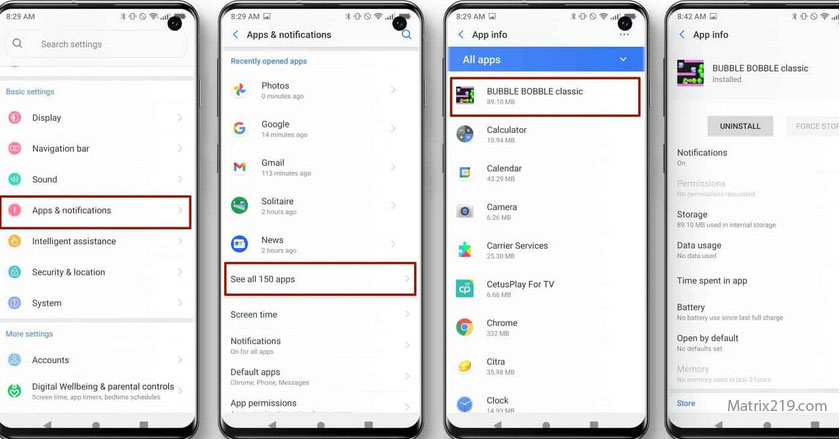
- Review app permissions and device administrator access: Remove any app with unnecessary control over accessibility, device admin, or system settings.
- Remove unknown or suspicious apps manually: Pay special attention to apps installed outside the Play Store or disguised as system tools.
- Scan for spyware persistence: Look for apps that reappear after removal or regain permissions automatically.
For detailed manual removal techniques, see Remove spyware manually.
iPhone recovery workflow
iPhone compromises are usually account-driven rather than malware-based. Cleanup focuses on configuration control, account integrity, and careful app restoration.
- Check configuration profiles: Remove any unknown or unmanaged profiles that can control network traffic, apps, or device behavior.
- Review Apple ID sync behavior: Ensure iCloud, Find My, and backup settings reflect your control and no unknown devices remain linked.
- Reinstall apps selectively: Avoid restoring full backups blindly; reinstall only essential apps from trusted sources.
For deeper context on advanced iPhone risks, review Jailbreak & hacking.
Step 5: Factory Reset or Safe Cleanup — Making the Right Call
A factory reset is often treated as a universal fix, but resetting blindly can fail, reintroduce the threat, or permanently destroy evidence needed for account recovery or legal reporting. The decision to reset should be based on the type and depth of the compromise.
When a factory reset actually solves the problem
A reset can be effective when the compromise is limited to user-level apps and no system manipulation has occurred.
- Malware is not system-level: The threat relies on installed apps, permissions, or accessibility abuse.
- No rooting or jailbreak involved: The operating system itself remains intact and trusted.
- Accounts are already secured: Email, Apple ID, Google account, and cloud access are fully under your control.
When a factory reset is not enough
In some cases, resetting the phone provides a false sense of security and allows the compromise to return.
- Persistent spyware: Advanced threats may survive resets through system abuse or reinstallation methods.
- Compromised backups: Restoring infected backups can immediately reinfect a clean device.
- Ongoing account takeover: If attackers still control your email or cloud accounts, reset alone will not stop them.
How to make the right reset decision
Before resetting, confirm that account recovery is complete and backups are clean. In high-risk cases, delaying the reset until professional review may prevent permanent data loss or repeated compromise.
Decision support resources:
Step 6: Banking, Work, and High-Risk Apps After Phone Hacking
Not all apps carry the same level of risk after a phone hack. Financial, work-related, and enterprise apps require special handling because continued access can lead to financial loss, legal exposure, or professional consequences.
Financial apps and digital wallets
Banking and payment apps are often targeted either directly or as a follow-up step once attackers gain account access. Even if no transactions are visible, assume exposure until proven otherwise.
- Banking apps: Contact your bank immediately, request a temporary account freeze if needed, and review recent transactions carefully.
- Crypto wallets: Move funds to a new secure wallet created on a clean device and revoke any unknown wallet permissions.
- Payment services: Review linked cards, disable one-click payments, and monitor for delayed or pending charges.
For detailed actions, follow Banking apps after phone hacking.
Work phones and enterprise accounts
Compromised work devices or enterprise accounts introduce additional risks, including data breaches and compliance violations. Personal cleanup steps are not enough in these cases.
- Notify IT or security teams immediately: Delaying disclosure can increase damage and liability.
- Assume credential exposure: Change work passwords only under IT guidance and revoke all active sessions.
- Follow company incident procedures: Many organizations require formal reporting and device assessment.
Read Work phone hacked: what to do for enterprise-specific guidance.
Step 7: When Phone Recovery Steps Fail Completely
Not all phone hacking cases end with full recovery. In some situations, continued recovery attempts can cause more harm than good—especially when attackers have long-term control or when ownership verification repeatedly fails.
Signs phone recovery is no longer viable
These indicators suggest that standard recovery steps are unlikely to succeed and that alternative decisions may be required:
- Repeated account lockouts even after identity verification and password resets
- Ownership proof repeatedly rejected by Google, Apple, or service providers
- IMEI or device trust issues where the device is flagged as compromised or blocked
- Security settings reverting automatically after cleanup or factory reset
Why continued recovery attempts may fail
In advanced cases, attackers may retain persistence through compromised cloud accounts, poisoned backups, or device-level trust abuse. Repeating resets or password changes without eliminating the root cause can prolong exposure and increase data loss.
Final options explained
When recovery is no longer reliable, these are the realistic paths forward:
- Device replacement: The safest option when system-level compromise or IMEI trust issues are confirmed
- Account migration: Creating new accounts and carefully transferring only verified clean data
- Controlled data loss: Accepting partial loss of data to regain long-term security and control
For technical context, see IMEI & device banning explained.
Legal reporting and escalation
If phone hacking involves financial theft, identity misuse, stalking, or persistent harassment, formal reporting may be necessary. This is especially important when recovery attempts fail and legal documentation is required.
For official reporting standards, consult: Official guidance on reporting identity theft and device-related fraud
Below are common questions that arise during real phone recovery scenarios.
Frequently Asked Questions About Phone Recovery
Should I reset my phone immediately after hacking?
No. Resetting your phone immediately or too early can make recovery harder or even lock you out of important accounts. You should always secure your email, Apple ID or Google account, and review active sessions first, then decide on a reset based on the type and depth of the compromise.
Can hackers spy in real time during recovery?
Yes. If attackers still have access through accounts, malicious apps, or system-level permissions, they may continue monitoring activity during recovery. This is why isolating the device and regaining account control must come before any cleanup or password changes.
Is changing passwords alone enough?
Not always. Changing passwords helps only if the phone itself is no longer compromised. If malware, spyware, or unauthorized system access remains on the device, new passwords can be captured again, making recovery ineffective.
How long does phone recovery usually take?
Recovery time varies widely. Simple app-based compromises may be resolved within hours, while account takeovers or identity verification issues can take days or even weeks, depending on platform response and ownership verification.
Can a phone ever be trusted again after hacking?
Sometimes. Phones affected by app-level malware can often be trusted again after proper cleanup and account recovery. However, devices with confirmed system-level compromise may require replacement to fully restore security.