Older computers are often excluded from modern security conversations, yet they frequently store sensitive files—personal documents, backups, financial records, or legacy business data. In 2026, Lightweight File Encryption Tools for Old PCs is a high-intent search because many users cannot upgrade hardware but still need reliable file protection. Heavy encryption suites can overwhelm limited CPU power, slow disks, and low memory systems, creating usability problems that lead users to disable security entirely.
This article explains how file encryption behaves on older hardware, what makes an encryption tool “lightweight” in practice, and how to secure files without crippling performance. The focus is on realistic constraints, correct expectations, and safe usage—so encryption remains an asset rather than a burden on aging systems.
Quick Navigation
Why Old PCs Need a Different Encryption Approach
Limited CPU and Memory Resources
Modern encryption tools may assume hardware acceleration that older systems lack.
Slower Storage Devices
Mechanical hard drives amplify performance impact during encryption and decryption.
Higher Risk of User Workarounds
When encryption feels too slow, users often bypass it entirely.
This context changes how encryption should be selected and used.
What “Lightweight” Means in File Encryption
Efficient Algorithms and Implementations
Lightweight tools minimize overhead without weakening cryptography.
Minimal Background Services
Tools that avoid constant background scanning perform better on old systems.
Simple, File-Level Operations
Encrypting files on demand is often safer than full-system encryption.
A foundational comparison is explained in File Encryption vs Disk Encryption.
File-Level Encryption vs Full-System Encryption on Old PCs
File-Level Encryption Advantages
-
Encrypt only what matters
-
Lower CPU and disk usage
-
Better performance on demand
Full-System Encryption Drawbacks
-
Constant overhead
-
Slower boot and access times
-
Higher failure impact on weak hardware
This trade-off is especially important on legacy systems.
How Encryption Performance Is Affected by Old Hardware
CPU-Bound vs Disk-Bound Operations
Encryption may stress CPU, disk, or both depending on implementation.
Single-Threaded vs Optimized Tools
Older CPUs benefit from tools optimized for low parallelism.
Encryption Time vs Ongoing Overhead
One-time encryption is often preferable to continuous protection.
Performance misconceptions are discussed in Is File Encryption Really Secure?
Key Features to Look for in Lightweight Encryption Tools
On-Demand Encryption
Encrypt files only when needed, not continuously.
No Mandatory Background Indexing
Avoid tools that scan or monitor files constantly.
Clear Temporary File Handling
Tools must not create large unencrypted temp files during processing.
Algorithm fundamentals are covered in Common File Encryption Algorithms (AES, RSA, ChaCha20).
Common Mistakes When Encrypting Files on Old PCs
Encrypting Everything by Default
This unnecessarily strains limited resources.
Using Container-Based Encryption Incorrectly
Large containers can cause long delays on weak disks.
Ignoring Key Backup
Old PCs are more prone to failure, increasing key-loss risk.
These issues are frequently detailed in Common File Encryption Mistakes to Avoid.
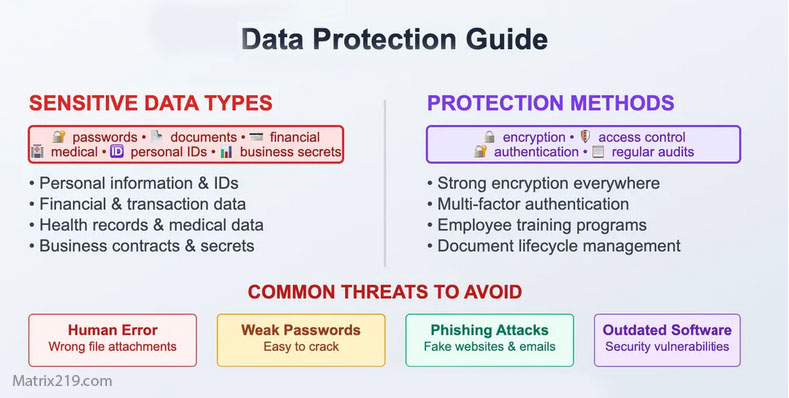
Common File Encryption Mistakes to Avoid
Encrypting Files on Old PCs for Personal Use
Protecting Essential Documents
Focus encryption on files that actually carry risk.
Securing External Backups
Encrypt files before copying them to USB or external drives.
Avoiding Cloud Sync Overhead
Local encryption reduces reliance on slow or unstable internet connections.
Personal risk scenarios are discussed in Best Free File Encryption Software in 2026.
Encrypting Files on Old PCs for Business or Work Use
Legacy Systems Still Handling Sensitive Data
Older PCs often run critical but outdated workflows.
Minimizing Workflow Disruption
Encryption must not slow down daily operations excessively.
Planning for Hardware Failure
Key storage and recovery planning is essential.
Professional considerations are covered in File Encryption Software for Business.
Encryption and External Storage for Old PCs
Encrypt Before Transferring
Encrypt files locally, then copy them to removable media.
Avoid Live Encryption on Slow Drives
Decrypt only when needed to reduce repeated disk stress.
Test Access on Other Systems
Ensure encrypted files can be opened elsewhere if the old PC fails.
External storage risks are discussed in File Encryption for USB and External Drives.
When Lightweight Encryption Is Not Enough
Highly Sensitive or Regulated Data
Old hardware may not meet security or compliance requirements.
Multi-User or Shared Systems
Access control is difficult without centralized management.
Long-Term Data Retention
Key management risks grow over time.
Enterprise alternatives are discussed in Centralized File Encryption Management Systems.
Practical Strategy for Encrypting Files on Old PCs
Prioritize High-Risk Files
Do not encrypt everything by default.
Use Simple, Predictable Workflows
Complex automation increases failure risk.
Back Up Keys Separately
Key loss on aging hardware can be catastrophic.
A broader strategy is outlined in Best File Encryption and Decryption Software in 2026 (Complete Guide).
Standards and Security Expectations
Even lightweight encryption tools should rely on cryptographic methods aligned with NIST encryption standards to ensure reduced overhead does not mean reduced security.
Frequently Asked Questions (FAQ)
Does file encryption slow down old PCs?
Yes, but lightweight, file-level tools minimize ongoing impact.
Is full-disk encryption a bad idea on old hardware?
Often yes, due to constant performance overhead.
Can old PCs still use strong encryption?
Yes. Strong encryption does not require new hardware if implemented efficiently.
Should encrypted files be moved off old PCs?
Yes, especially for long-term storage or backups.
Is encryption worth it on very old systems?
Yes, when applied selectively and with proper key management.