Losing an encryption key is one of the most feared scenarios in data security—and for good reason. In 2026, What Happens If You Lose an Encryption Key? is a critical question because modern encryption is designed to be unforgiving by default. Strong encryption protects data precisely because there are no shortcuts or backdoors when keys are missing.
This article explains exactly what happens when an encryption key is lost, why recovery is often impossible, and how different encryption models handle this risk. Instead of vague warnings, the focus is on real outcomes, technical limits, and practical planning. Understanding these realities helps you decide how to use encryption responsibly—without gambling your data on assumptions.
Quick Navigation
Why Encryption Keys Are Irreplaceable
Encryption Is Mathematically Enforced
Strong encryption is designed so that data cannot be decrypted without the correct key.
No “Forgot Password” Option
Unlike online accounts, encrypted files do not have recovery mechanisms by default.
Security Depends on This Property
If keys were recoverable, encryption would be fundamentally weak.
This principle is foundational to all modern encryption systems.
What Actually Happens When a Key Is Lost
Encrypted Files Become Unreadable
Without the key, the encrypted data remains intact but permanently inaccessible.
No Tool Can “Crack” Proper Encryption
Brute-force attacks against strong encryption are computationally infeasible.
Data Loss Is Immediate and Final
There is no degradation or partial access—files are simply locked forever.
This outcome surprises many first-time encryption users.
Key Loss Scenarios and Their Consequences
Personal File Encryption
Losing a key usually means permanent loss of personal files.
Business and Team Environments
Key loss can halt operations, disrupt access, and cause downtime.
Long-Term Archives
Years of archived data may become inaccessible instantly.
These scenarios highlight why planning matters more than tools.
Why Some Users Assume Recovery Is Possible
Confusing Encryption With Account Security
People expect recovery because online services offer resets.
Relying on Software Vendors
Encryption software providers do not—and should not—store your keys.
Misunderstanding Cloud Storage Behavior
Cloud platforms cannot decrypt files encrypted with user-owned keys.
These misconceptions are frequently discussed in Common File Encryption Mistakes to Avoid.
Differences Between Encryption Models When Keys Are Lost
File-Level and Container Encryption
Key loss usually results in total and permanent data loss.
OS-Level or Managed Encryption
Recovery may be possible if keys were backed up or escrowed.
Centralized Enterprise Encryption
Organizations may recover access through controlled key escrow.
These models are compared in Best File Encryption Software Compared (2026).
The Security Trade-Off: Recoverability vs Control
Maximum Privacy Means Maximum Responsibility
User-controlled keys provide the strongest privacy—but no safety net.
Managed Recovery Reduces Risk
Escrow and recovery mechanisms trade some control for resilience.
Choosing the Right Balance
The right model depends on risk tolerance and use case.
This trade-off is central to professional encryption design.
Key Loss in Cloud and Backup Scenarios
Encrypted Cloud Backups
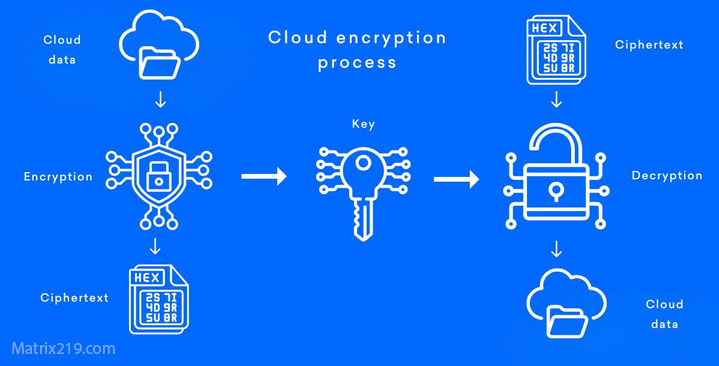
Cloud providers cannot help recover encrypted data without keys.
Backup Files Are Not a Solution Without Keys
Backups preserve encrypted data, not access.
Key Loss Multiplies Damage
Losing keys invalidates all encrypted copies simultaneously.
Cloud-related risks are discussed in File Encryption for Cloud Storage.
File Encryption for Cloud Storage
How Businesses Handle Key Loss Risk
Key Escrow and Recovery Policies
Organizations define controlled recovery paths.
Role-Based Key Access
No single individual should be the sole key holder.
Regular Testing of Recovery Procedures
Recovery plans must be verified, not assumed.
Business approaches are explained in Centralized File Encryption Management Systems.
How Individuals Can Reduce Key Loss Risk
Secure Key Backups
Keys should be backed up separately and securely.
Avoid Single Points of Failure
Do not store keys on one device only.
Document Access Procedures
Clear instructions reduce future confusion.
Personal planning is discussed in Best File Encryption and Decryption Software in 2026 (Complete Guide).
When Key Loss Is Preferable to Recovery
High-Sensitivity Data
Permanent inaccessibility may be preferable to unauthorized access.
Legal and Privacy Requirements
Some data must be irrecoverable if keys are destroyed.
End-of-Life Data Policies
Key destruction can be a deliberate security decision.
Understanding intent is as important as technology.
Standards and Security Expectations
Strong encryption systems intentionally align with NIST encryption standards that assume key loss equals data loss—a necessary property for meaningful security.
Frequently Asked Questions (FAQ)
Can encrypted files be recovered without the key?
No. Properly encrypted files are mathematically unrecoverable.
Do encryption tools store backup copies of keys?
No. Reputable tools do not retain user keys.
Can cloud providers recover encrypted files?
No, if client-side encryption is used.
Is key escrow a security risk?
It can be, if poorly implemented or abused.
Should everyone use recoverable encryption?
No. It depends on privacy, risk, and operational needs.