Social Media Scams have become one of the fastest-spreading forms of digital fraud because they ride on trust, familiarity, and social proof. In 2026, scams no longer rely on cold outreach alone—they spread through likes, comments, shared posts, and direct messages that appear to come from real people.
Platforms are designed to reward engagement and speed. Scammers exploit this by blending in, mimicking normal behavior, and hijacking social relationships to move fraud at scale.
This article explains how social media scams work, why they spread so easily, and how to stop them before trust turns into loss.
Why Social Platforms Are Ideal for Scams
Social platforms lower defenses by design.
Users expect informal communication, quick replies, and friendly interactions. Profiles, photos, and shared connections create instant familiarity—even when the account is fake or compromised.
Scammers don’t need to build trust from scratch. The platform does it for them.
Common Types of Social Media Scams
Most social media scams fall into repeatable patterns.
These include fake giveaways, impersonation of influencers or brands, compromised friend accounts asking for help, investment pitches in DMs, fake job offers, and phishing links disguised as videos or documents.
The format changes. The manipulation stays the same.
Account Compromise as a Distribution Engine
Many social scams originate from hacked accounts.
Once an account is compromised, scammers message friends and followers using a familiar voice and history. Recipients trust the sender and lower verification instinctively.
This turns social networks into fraud amplification systems.
The Role of Likes, Comments, and Social Proof
Social proof is weaponized heavily.
Scammers inflate likes, comments, and shares using bots or coordinated networks. A post that “everyone is engaging with” feels safe—even when it isn’t.
Visibility becomes credibility.
DM-Based Scams and Private Pressure
Direct messages remove public scrutiny.
Scammers push conversations into private DMs where urgency, secrecy, and emotional manipulation are easier to apply. Requests escalate quietly, away from community correction.
Privacy becomes leverage.
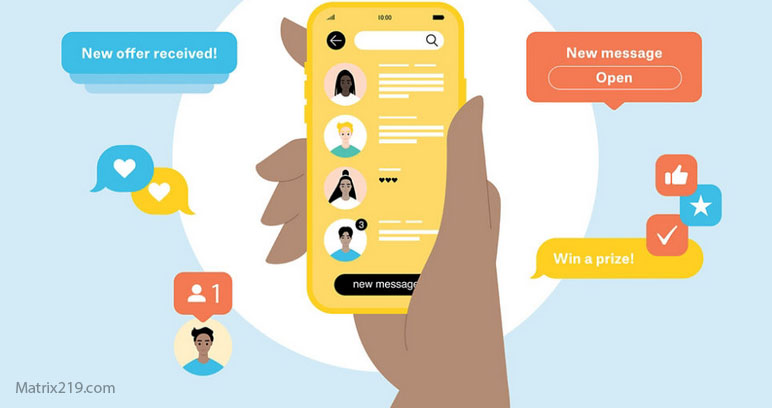
Fake Giveaways and Promotions
Fake giveaways are designed for rapid spread.
They promise rewards for liking, sharing, or clicking links. These actions expand reach while funneling victims toward phishing pages or fake forms.
Virality replaces verification.
Job, Brand, and Influencer Impersonation
Scammers impersonate brands and influencers to borrow authority.
Fake verification badges, lookalike usernames, and copied content create convincing clones. Victims assume legitimacy based on appearance and follower count.
Brand recognition is exploited—not earned.
Why Reporting Often Feels Ineffective
Platforms struggle to moderate at scale.
Scammers create new accounts faster than takedowns occur. Victims often feel reporting is pointless, but reports still feed detection systems and limit reach over time.
Friction matters—even when results aren’t immediate.
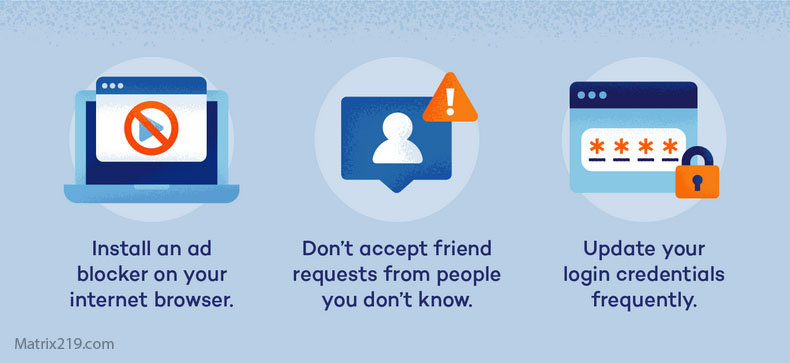
How to Reduce Social Media Scam Risk
Effective protection relies on habits.
Key rules include:
-
Treating unsolicited DMs as untrusted
-
Verifying requests through other channels
-
Avoiding links sent via social platforms
-
Securing accounts with strong authentication
-
Being cautious with public personal information
Boundaries beat vigilance.
How to Reduce Social Media Scam Risk
What To Do If You Interacted With a Social Scam
If you clicked, replied, or shared information:
-
Secure affected accounts immediately
-
Change passwords and revoke sessions
-
Warn contacts if your account may be compromised
-
Report the content and account
Fast response limits spread.
Social Media Scams as a Trust Problem
Social scams succeed because they exploit human connection.
The solution is not abandoning platforms—but recognizing that trust online must be verified, not assumed.
Social context is not security context.
For the full fraud framework this article supports, see: Online Scams & Digital Fraud: How to Spot, Avoid, and Recover (2026 Guide)
FAQ
Are social media scams always obvious?
No. Many look like normal interactions.
Can verified accounts be used in scams?
Yes, if they are compromised or impersonated.
Is it safe to click links from friends?
Not without verification.
Why do scammers prefer DMs?
Private pressure is harder to challenge.
Do platforms protect users automatically?
Partially—but user awareness is still essential.