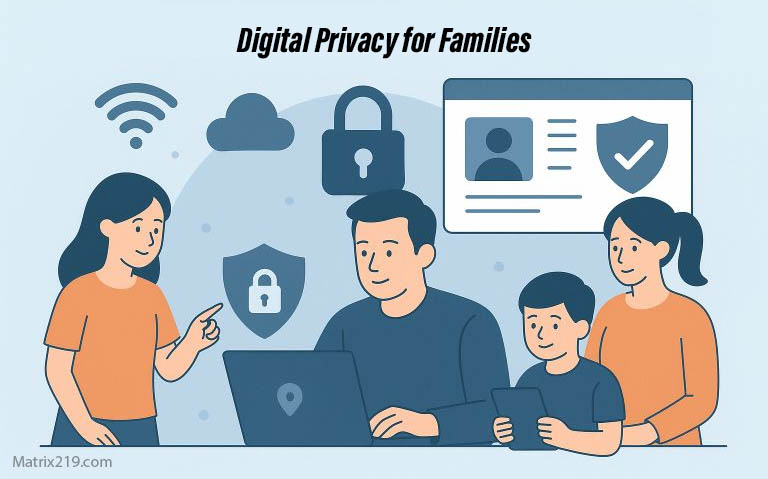
Digital Privacy for Families has become increasingly important as households rely on shared devices, multiple accounts, and always-connected platforms. Children, teenagers, and adults often use the same networks while having very different privacy risks and awareness levels.
Family privacy is not just about individual behavior. One poorly configured device or account can expose others through shared networks, synced services, or reused credentials. Understanding these connections is essential for reducing overall household exposure.
This article explains how digital privacy affects families, where common risks appear, and what practical steps help protect everyone online.
Quick Navigation
Why Family Privacy Is More Complex
Families use shared infrastructure. Home Wi-Fi, shared computers, smart TVs, and connected devices link activity across users.
Accounts may be shared, reused, or logged in permanently. These habits increase tracking accuracy and make it harder to separate individual activity.
To understand how tracking systems connect behavior, review: Digital Privacy and Online Tracking: How You’re Tracked Online and How to Protect Yourself
Privacy Risks for Children and Teenagers
Children often use apps and platforms designed to maximize engagement. These services collect behavioral data that can persist long-term.
Teenagers may overshare information without understanding long-term consequences. Location sharing, social media profiles, and gaming platforms introduce additional tracking risks.
Understanding how apps collect data helps parents guide decisions, as explained in: How Apps Track You
Managing Shared Devices and Accounts
Shared devices create privacy overlap. Browsers may sync history, cookies, and logins across profiles.
Creating separate user profiles on devices and browsers helps isolate activity. Avoiding shared logins reduces cross-account tracking.
For insight into account-based data collection, see: Who Collects Your Data Online
Home Network and Smart Device Privacy
Smart TVs, speakers, and connected home devices collect usage data continuously. These devices often have limited privacy controls.
Reviewing device settings, disabling unnecessary features, and limiting voice activation reduce household exposure.
Understanding non-browser tracking methods helps clarify these risks, as explained in: Online Tracking Beyond Websites
Teaching Privacy Awareness at Home
Privacy protection improves when families understand basic concepts. Teaching children why permissions matter and how tracking works builds long-term habits.
Simple explanations help younger users recognize privacy risks without fear or complexity.
Practical Family Privacy Habits
Families benefit from routine privacy checks. Reviewing permissions, updating devices, and discussing new apps help maintain control.
Establishing shared guidelines around account use and device sharing reduces accidental exposure.
For practical steps families can follow together, see: How to Stop Online Tracking
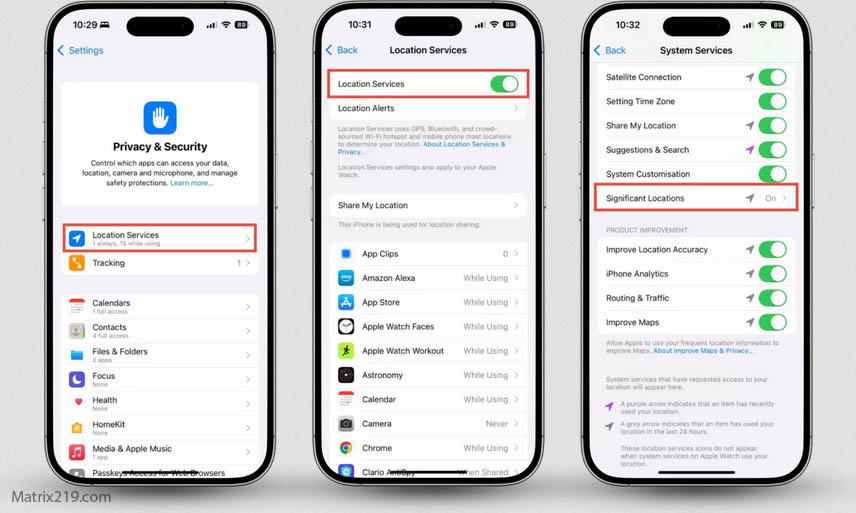
How to Stop Online Tracking
Balancing Safety, Privacy, and Usability
Parental controls and monitoring tools can improve safety but may increase data collection. Choosing tools with transparent policies helps balance protection and privacy.
Understanding this trade-off helps families make informed decisions rather than relying on defaults.
FAQ
Should families use shared accounts?
No. Separate accounts reduce tracking and improve security.
Are parental control apps safe for privacy?
Some are, but many collect extensive data. Policies should be reviewed carefully.
Can children’s data be collected legally?
Yes. Regulations exist, but enforcement varies.
Do smart home devices affect family privacy?
Yes. They collect usage data across all household members.
Is family privacy hard to manage?
It requires awareness, but simple habits make a big difference.