Taking Back Control of digital privacy does not mean becoming invisible online or fighting every tracking system. For most users, that goal is unrealistic and unsustainable. What is realistic is regaining meaningful control over how much data is collected, when it is shared, and why it exists.
After understanding tracking technologies, data collectors, privacy myths, and user fatigue, the final step is reframing privacy as a long-term strategy rather than a constant battle. Control comes from informed choices, not from chasing absolute protection.
This article summarizes a realistic approach to digital privacy that works in everyday life.
Why Total Privacy Is an Unrealistic Goal
Modern internet services are built around data collection. Accounts, personalization, and synchronization all depend on some level of tracking.
Trying to eliminate all data collection often leads to broken services, frustration, and eventually abandonment. This is one of the main drivers of privacy fatigue.
Understanding the full tracking landscape helps set realistic expectations, as explained in:
Digital Privacy and Online Tracking: How You’re Tracked Online and How to Protect Yourself
What “Control” Really Means in Digital Privacy
Control does not mean zero data collection. It means intentional data sharing.
Users regain control when they decide:
-
Which accounts stay logged in
-
Which apps deserve permissions
-
Which services are worth the data cost
This shift turns privacy from a defensive reaction into an active choice.
High-Impact Actions That Actually Matter
Not all privacy actions deliver equal results. A few changes have outsized impact compared to dozens of minor tweaks.
Separating logged-in activity from casual browsing, limiting app installations, and choosing browsers with protective defaults reduce exposure more than constantly adjusting settings.
These priorities are explained in detail here:
How to Stop Online Tracking
Accepting Trade-Offs Without Giving Up
Privacy always involves trade-offs. Convenience, personalization, and integration often require data sharing.
The goal is not to reject all trade-offs, but to avoid unconscious ones. When users understand what they are giving up, trade-offs become intentional rather than accidental.
This balance is explored further in:
Online Privacy vs Convenience
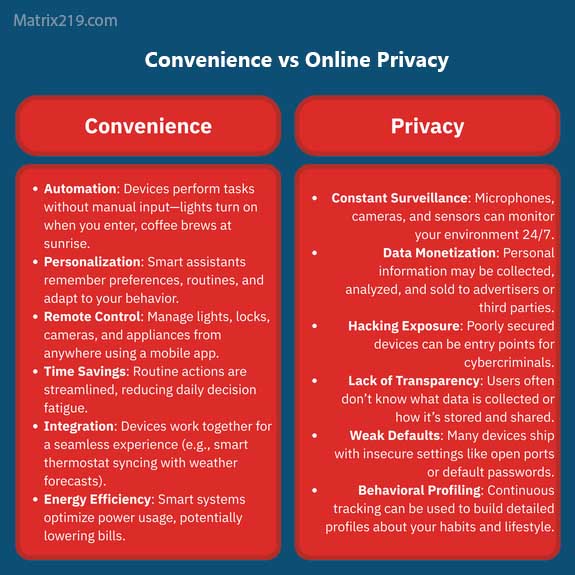
Online Privacy vs Convenience
Building Sustainable Privacy Habits
Sustainable privacy relies on habits that require minimal ongoing effort. One-time setups with lasting impact outperform constant monitoring.
Examples include:
-
Using separate browsers or profiles
-
Periodically reviewing app permissions
-
Avoiding unnecessary single sign-on
These habits reduce exposure without demanding constant attention.
Why Awareness Beats Tools Alone
Privacy tools help, but awareness determines effectiveness. Without understanding tracking mechanisms, tools are often misused or overtrusted.
Awareness allows users to adapt as platforms and technologies evolve, making privacy protection resilient rather than fragile.
Understanding who benefits from data collection reinforces this awareness, as explained in:
Who Collects Your Data Online
Moving Forward With Realistic Expectations
Digital privacy is not static. Tracking methods, laws, and platforms will continue to change.
Users who focus on control, awareness, and sustainability are better positioned to adapt than those chasing complete protection.
Privacy becomes manageable when it is treated as an ongoing skill rather than a one-time fix.
FAQ
Can users really control digital privacy?
Yes, but only partially. Control means influence, not total prevention.
Is reducing tracking worth the effort?
Yes. Even partial reduction lowers long-term profiling.
Do privacy tools still matter?
Yes, when combined with informed behavior.
Is it too late to care about privacy?
No. Future data collection can always be reduced.
What is the most important privacy mindset shift?
From perfection to practicality.