Location Tracking Explained is important because many users assume that disabling GPS is enough to stop location tracking. In reality, location data can be inferred through multiple indirect methods that do not rely on GPS access at all.
Websites, apps, and devices can estimate location using network signals, device behavior, and system metadata. These techniques often operate silently and continuously, making location one of the most sensitive privacy areas.
This article explains how location tracking works without GPS, why it is so accurate, and what users can do to reduce exposure.
Quick Navigation
Why Location Data Is Valuable
Location data reveals movement patterns, routines, and habits. Over time, it can indicate where users live, work, shop, or travel.
Advertisers use location data for targeting. Platforms use it for personalization and analytics. Once collected, location data is often retained longer than users expect.
To understand how location data fits into broader tracking systems, see: Digital Privacy and Online Tracking: How You’re Tracked Online and How to Protect Yourself
Wi-Fi and Network-Based Location Tracking
Devices constantly scan for nearby Wi-Fi networks. The identifiers of these networks can be compared against large databases to estimate location.
Even without connecting to Wi-Fi, the presence of known networks can reveal approximate position. This method works indoors and does not require GPS access.
IP Address and Network Metadata
IP addresses provide approximate geographic information. While not precise to street level, IP-based location is often accurate to city or region.
Combined with other signals, IP data contributes to more precise location estimates.
A technical overview of these tracking layers is covered here: How Websites Track You
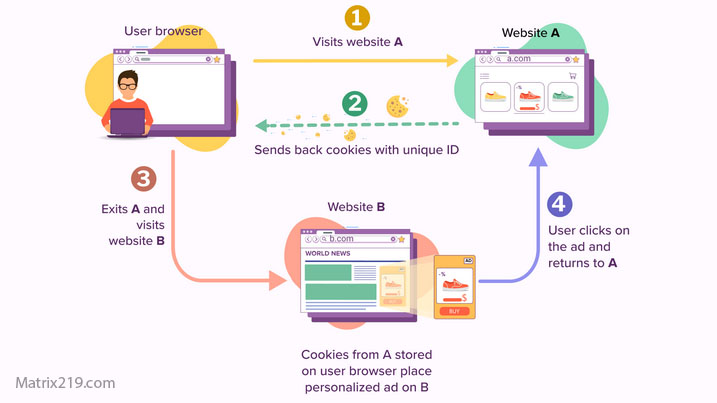
How Websites Track You
Bluetooth and Proximity Signals
Bluetooth beacons and nearby devices emit signals that can be detected by phones and apps. These signals allow location estimation within buildings, stores, or public spaces.
Retail environments and transportation hubs commonly use Bluetooth-based tracking to analyze movement patterns.
Sensor and Behavioral Location Inference
Devices contain sensors such as accelerometers and gyroscopes. Movement patterns from these sensors can reveal travel behavior and location changes.
Combined with timestamps and usage habits, these signals strengthen location inference even without direct access.
How Apps Use Location Without GPS
Apps may infer location through network connections, system metadata, and third-party SDKs. This allows location awareness even when GPS permissions are denied.
Understanding app-level data collection is essential, as explained in: How Apps Track You
How to Reduce Location Tracking
Reducing location tracking requires limiting permissions, disabling unnecessary wireless features, and reviewing app behavior.
Using location controls selectively rather than globally helps maintain functionality while reducing exposure.
For practical steps that work across devices, see: How to Stop Online Tracking
FAQ
Can my location be tracked without GPS?
Yes. Wi-Fi, IP addresses, Bluetooth, and sensors can all reveal location.
Does airplane mode stop location tracking?
It stops many signals, but not all tracking methods in every scenario.
Are websites able to track precise location?
Usually not precise, but they can estimate region or city.
Do apps need permission to track location?
Some methods do not require explicit GPS permission.
Is location data stored long-term?
Often yes, especially when linked to accounts or analytics systems.