Social media privacy is difficult to understand because the information collected by a platform goes far beyond the posts, photos, and comments a user intentionally shares When people use social platforms, information can be generated from content they view, accounts they interact with, features they use, devices they connect, and other activity associated with their use of the service. Some platforms can also receive information from businesses and other partners about activity that occurs outside their own apps and websites.
The result is a detailed stream of behavioral and technical information that can be used for personalization, advertising, analytics, security, and other platform functions This guide explains how social media tracking works, what information platforms can collect, what happens beyond the platform itself, and which privacy controls can actually reduce exposure.
Quick Navigation
Why Social Media Platforms Collect User Data
Data collection supports many of the functions that make social platforms useful. Platforms can use information to personalize feeds, recommend content, measure engagement, improve products, maintain security, and support advertising systems.
The business model also matters. Advertising platforms have an incentive to understand audiences and measure whether advertisements reach relevant users The amount and type of information collected varies between platforms, products, regions, and account settings.
- For a broader explanation of online tracking, see Digital Privacy and Online Tracking.
What Social Media Platforms Can Learn From Your Activity
Social platforms can learn from much more than explicit actions such as posting or commenting.
Depending on the platform, relevant signals can include:
- Content you view or interact with
- Accounts, pages, groups, or people you interact with
- Features you use
- Frequency and duration of activity
- Device and browser information
- Location-related information
- Searches and other interactions
- Advertising interactions
- Information provided by other users about you
Meta, for example, states that it may collect information about content users view or engage with, the features they use, the actions they take, the accounts they interact with, and the time, frequency, and duration of their activities, This does not mean every platform collects every category, or that every interaction is used in exactly the same way.
Behavioral Tracking on Social Media
Behavioral tracking refers to collecting and analyzing information about how users interact with a service For example, repeatedly viewing a particular type of content can provide a platform with a signal about potential interests. Interactions with certain accounts or topics can provide additional context.
A single action rarely tells the whole story. The privacy concern becomes more significant when many signals are combined over time to create a more detailed profile This is different from saying that platforms can automatically determine a user’s exact thoughts or emotions. Behavioral data can support inferences, but those inferences are not necessarily accurate.
Account-Based Identity and Cross-Device Tracking
A social media account can provide a persistent identity that allows activity to remain associated with the same account across sessions and devices When a user signs into the same service on a phone, tablet, and computer, the platform can potentially associate information from those devices with the same account.
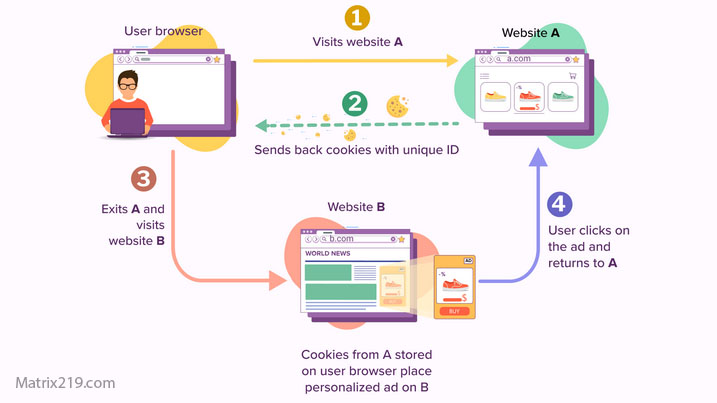
Some platforms can also receive information through websites, apps, social plugins, advertising tools, and other integrations outside their own services Meta states that it can receive information from partners through tools such as Meta Pixel, social plugins, Facebook Login, APIs, and SDKs, including information about activity on websites and apps outside Meta products.
- For a deeper explanation of the technical mechanisms behind website tracking, see How Websites Track You.
How Websites Track You
What Data Can Be Used to Build a Social Media Profile?
A social media profile can contain both information that users provide directly and information inferred or generated from their activity Potential categories include interests, connections, device information, location-related signals, advertising interactions, and other behavioral information.
Platforms may use these signals to personalize content or advertising. The exact process varies between companies and products, and the resulting profile is not necessarily a perfect representation of the person The broader data ecosystem matters as well because platforms may receive information from advertisers, publishers, app developers, and other partners.
- To understand the organizations involved in collecting and processing online data, see Who Collects Your Data Online.
Social Media and Location Tracking
Location can be an important part of the information associated with social media activity Depending on the platform and device, location-related information may come from information users provide, device settings, network information, or other technical signals A platform may use location information for features such as location-based content, recommendations, security, advertising, or other functions However, a platform estimating a general location from network information is not the same as having continuous access to precise GPS coordinates.
- For a deeper explanation of the different ways location can be inferred, see Location Tracking Explained.
Does a Private Social Media Account Stop Tracking?
No. Making an account private primarily changes who can view or interact with certain content. It does not automatically mean that the platform stops collecting information about how the account uses its service.
This distinction is important because two separate privacy questions are often confused:
- Who can see what you share?
- What information can the platform collect and use about your activity?
Privacy settings can provide meaningful control over audience visibility, permissions, advertising preferences, and other areas, but they do not necessarily disable every form of platform-level data collection.
Can Social Media Platforms Track Activity Outside Their Apps?
In some cases, yes. Social platforms can receive information from websites, applications, advertisers, publishers, and other partners through integrations designed to support analytics, advertising, measurement, authentication, or other services.
For example, Meta says that partners can provide information about activity on and off Meta products through business tools such as the Meta Pixel and social plugins.
This does not mean that a platform has unrestricted visibility into everything a person does online. The information available depends on the specific integration, technology, browser, device, account, and privacy controls involved.
Why Social Media Tracking Can Feel So Accurate
Social platforms can combine many different signals instead of relying on a single identifier.
An account may provide a stable identity, while activity data provides behavioral context. Device information, location-related signals, interactions, and information received from partners can add further context.
When these signals are combined, recommendations and advertisements can appear highly personalized even when the platform does not know every detail about a user’s real-world life.
Personalization should therefore not be interpreted as proof that a platform is literally listening to every private conversation or knows exactly what a person is thinking.
What Social Media Privacy Settings Actually Change
Privacy settings are useful, but their effect depends on what they control.
Depending on the platform, settings may control:
- Who can see posts and other content
- Who can contact or follow you
- Location permissions
- Connected apps and services
- Advertising preferences
- Some forms of personalized content
- Access to certain account information
Meta, for example, provides settings for audience visibility, profile information, posts, stories, followers, tagging, blocking, and other privacy controls. It also provides tools for reviewing account information and activity The important point is to understand each setting instead of assuming that one “private account” switch disables all data collection.
How to Reduce Social Media Tracking Exposure
Completely eliminating platform data collection is usually unrealistic if you continue using the service. A more practical goal is to reduce unnecessary exposure and control the information you can reasonably control.
- Review privacy and advertising settings regularly.
- Limit unnecessary profile information.
- Review location permissions and disable access that is not needed.
- Remove old or unnecessary connected apps and services.
- Review which third parties can access your account.
- Limit public posts and profile information when appropriate.
- Use separate accounts when there is a practical reason to separate activities.
- Consider using a browser instead of a dedicated app for services that do not require app-specific features.
- Reduce unnecessary engagement with content you do not need to interact with.
The goal is not to become invisible. It is to reduce the amount of unnecessary information generated and connected to your online identity, For broader practical tracking-reduction techniques, see How to Stop Online Tracking.
Social Media Privacy: What You Can and Cannot Control
Users have meaningful control over some aspects of social media privacy, but not all of them.
| Area | What You Can Often Control | What May Remain Outside Your Control |
|---|---|---|
| Profile visibility | Who can view certain information | Information already shared or reshared by others |
| Location | Device and app permissions | Some location-related signals derived from technical data |
| Advertising | Some personalization and ad preferences | All forms of platform data processing |
| Connected apps | Which integrations remain authorized | Data already processed by another service |
| Activity | How much you post, view, and interact | Information generated by other users or existing records |
This is why privacy management works better as an ongoing process than as a one-time settings change.
FAQ
Do social media platforms track users who do not post?
Yes, using a social platform can generate information even when you do not publish content. Viewing content, interacting with accounts, using features, and other activity can contribute to the information associated with an account.
Does making a social media account private stop tracking?
No. A private account mainly limits visibility to other users. It does not automatically prevent the platform from collecting information about activity within its service.
Can social media platforms receive information from outside websites?
Some platforms can receive information from websites and apps through business tools, advertising technologies, plugins, APIs, or other integrations. The exact information available depends on the technology and how the external service is configured.
Do social media apps collect more information than websites?
Not necessarily in every case. Apps can have access to device capabilities and permissions that a browser-based service may not have, but the actual data collection depends on the platform, device, permissions, and implementation.
Can I completely stop social media tracking?
Not while continuing to use a platform normally. You can reduce exposure by limiting activity, reviewing permissions and privacy settings, removing unnecessary integrations, and reducing the amount of information you provide.
Does personalized content mean a social platform knows exactly what I am thinking?
No. Personalized recommendations are generated from data and models that infer likely interests or preferences. These systems can be highly effective without being perfectly accurate or having direct access to a person’s thoughts.