What Is Digital Privacy is a question that has become increasingly important as everyday life moves further online. Browsing websites, using mobile apps, shopping, communicating, streaming content, and even interacting with connected devices can generate information about who we are, what we do, and what we are interested in.
Digital privacy is not simply about hiding from the internet. It is about understanding what information is being collected, who can access it, how it is being used, and how much control you have over that information, Modern tracking systems can connect activity across websites, applications, accounts, and devices. At the same time, privacy tools and regulations have evolved to give users more control over some forms of data collection, This article explains what digital privacy means, why it matters in 2026, where the biggest risks come from, and what practical steps users can take to reduce unnecessary exposure.
Quick Navigation
What Is Digital Privacy?
Digital privacy is the ability to control how personal information is collected, processed, stored, shared, and used in digital environments. That information can include obvious details such as your name, email address, phone number, and location. It can also include less obvious information such as browsing behavior, device characteristics, search activity, purchase history, application usage, and interactions with online services.
Digital privacy therefore extends far beyond passwords and account security. A device can be completely secure from hackers while still generating large amounts of information for legitimate services, advertisers, analytics companies, or other organizations, The practical goal of digital privacy is not necessarily to eliminate every form of data collection. Instead, it is to reduce unnecessary collection and maintain reasonable control over information that can reveal personal behavior.
Why Digital Privacy Matters in 2026
Personal data has become an important part of the modern digital economy. Companies can use information about users to personalize services, measure engagement, improve products, deliver advertising, detect fraud, and make automated decisions.
The more information that is collected over time, the more detailed a person’s digital profile can become, A single website visit may reveal very little. Hundreds or thousands of interactions can reveal much more about interests, routines, preferences, relationships, and habits.
This is why privacy is a long-term issue rather than something that matters only when a data breach occurs. The U.S. Federal Trade Commission explains that everyday online activities can give businesses access to information about people’s habits, tastes, and activities, and that this information may be used for targeted advertising or shared with other organizations.
- For a broader look at how online tracking works, see Digital Privacy and Online Tracking.
Digital Privacy vs Security
Privacy and security are closely related, but they are not the same thing. Security focuses primarily on protecting systems and information from unauthorized access, attacks, theft, and manipulation. Privacy focuses on how information is collected and used, including situations where the collection is completely authorized.
For example, an application can securely store your location data while still collecting more location information than you expected. The system may be secure, but the privacy implications can still be significant. Good digital protection therefore requires both security and privacy awareness.
- For a deeper comparison, see Privacy vs Security.
Digital Privacy vs Online Anonymity
Digital privacy should also not be confused with anonymity. Anonymity means that activity cannot easily be connected to a real-world identity. Privacy is broader and focuses on controlling the collection and exposure of information.
A person can use the internet without being completely anonymous while still maintaining reasonable privacy. For example, a user may have an account with a legitimate service while limiting unnecessary permissions, refusing optional tracking, and separating different online activities.
- For a deeper discussion of the limits of anonymity, see Can You Be Anonymous Online?.
What Personal Data Is Collected Online?
Online services can collect many different categories of information. Some data is provided directly by users, while other information is generated automatically during normal interaction.
- Name, email address, and account information.
- IP address and general network information.
- Browser and operating system characteristics.
- Device information and advertising identifiers.
- Location information.
- Browsing and search activity.
- Purchase and transaction history.
- Application usage and interaction patterns.
- Social connections and communication metadata.
- Preferences and interests inferred from behavior.
Not every service collects all of these categories. The amount and type of information depend on the service, device, settings, permissions, and applicable laws. The important issue is understanding that personal data includes more than information you deliberately type into a form.
How Websites Collect Personal Information
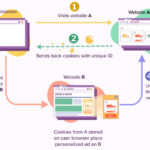
Websites can collect information through several different technologies operating at the same time. Cookies can store identifiers and preferences. JavaScript can measure interactions. Analytics systems can record page visits and events. Third-party services can receive information when their resources are loaded. Websites may also use browser storage, URL parameters, tracking pixels, and other technologies to measure activity.
- For a detailed explanation of these mechanisms, see How Websites Track You.
How Apps Affect Digital Privacy
Mobile applications create another major source of data collection. Apps may request access to location, contacts, photographs, microphones, cameras, notifications, and other device features. Some applications also collect usage information and device-level signals that do not always require the same permissions as sensitive content. Third-party software development kits can introduce additional data collection because analytics, advertising, and crash-reporting services may be integrated directly into applications.
- For a deeper explanation of mobile tracking, see How Apps Track You.
Account-Based Tracking and Digital Identity
Accounts are one of the strongest ways online services connect activity over time, When you remain logged into an account, actions performed on different sessions or devices can potentially be associated with the same account identity.
This can make tracking more persistent than browser-based identifiers alone. Changing browsers or clearing cookies may have limited impact if the same account is used repeatedly, This is particularly important when the same company operates several products or services that can potentially be connected through an account ecosystem.
- For more information, see Account-Based Tracking.
Cross-Device Tracking and Digital Privacy
Modern users rarely stay on one device. A typical person may use a smartphone, laptop, tablet, smartwatch, smart TV, and other connected products throughout the day. Cross-device tracking attempts to connect activity from multiple devices to the same person or account.
Account logins are one method. Other systems may use combinations of network information, behavioral patterns, device signals, and other identifiers, This creates a larger and more persistent picture of user behavior than tracking a single device would provide.
- Learn more in Cross-Device Tracking Explained.
Browser Fingerprinting and Privacy
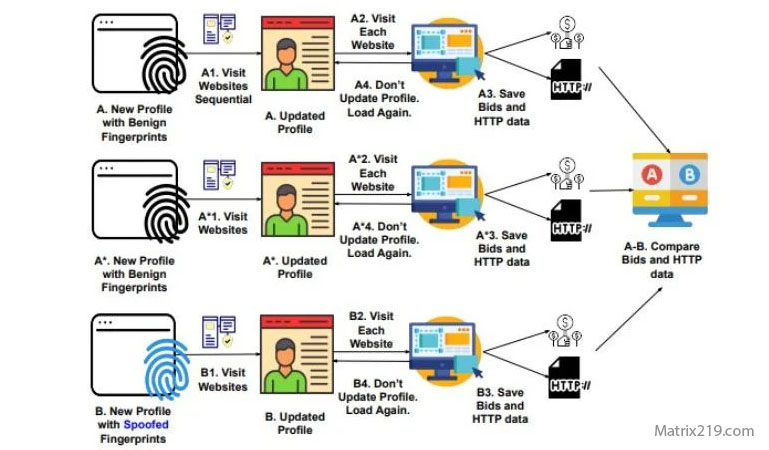
Browser fingerprinting is another important privacy concern because it does not depend entirely on traditional cookies. A website can examine characteristics exposed by a browser and device, such as browser configuration, operating system information, screen characteristics, language preferences, and other technical signals.
When multiple signals are combined, they can sometimes create a distinctive fingerprint that helps distinguish one browser from another, This does not necessarily mean that every fingerprint identifies a person’s real-world identity. However, it can contribute to recognition and tracking.
- For a detailed explanation, see Browser Fingerprinting Explained.
Social Media and Digital Privacy
Social media platforms collect information through both active and passive behavior, Likes, comments, follows, searches, shares, and uploaded content are obvious examples. Less obvious signals can include viewing behavior, interaction frequency, scrolling, and the types of content users spend time consuming.
Over time, these signals can be used to personalize feeds, recommendations, and advertising, Social media accounts can also become persistent identifiers that connect activity across devices and sessions.
- For a deeper look at this subject, see Social Media Privacy Explained.
Smart Devices and Privacy at Home
Digital privacy does not stop at the browser. Smart TVs, voice assistants, cameras, thermostats, watches, speakers, and other connected devices can collect information inside the home.
These devices may generate usage data, diagnostic information, voice interactions, sensor data, or other telemetry depending on their design and configuration, The Federal Trade Commission also provides consumer guidance covering privacy and security considerations for internet-connected devices, including voice assistants and home security cameras.
- For more information about connected homes, see Smart Devices and Privacy.
Why Third-Party Data Collection Matters
One of the biggest challenges in digital privacy is that the organization you interact with directly may not be the only organization receiving information, Websites and applications can integrate advertising networks, analytics providers, social media services, payment platforms, cloud services, and other external technologies.
This creates a wider data ecosystem in which information can move between multiple parties, The presence of a third party does not automatically mean that data is being misused. However, it increases the number of organizations involved and makes it more important to understand how information is shared.
- See Third-Party Trackers Explained for a deeper explanation.
Digital Privacy and Advertising
Advertising is one of the major reasons companies invest heavily in tracking technologies. Advertising systems can use information about browsing activity, interests, interactions, and other signals to decide which advertisements to show and how to measure their effectiveness.
Some advertising systems can also connect activity across websites or applications when sufficient identifiers or signals are available. This is why an advertisement viewed on one device can sometimes appear relevant on another.
- For a detailed explanation, see Ad Tracking Explained.
Consent Does Not Automatically Mean Privacy
Many websites display cookie and privacy consent banners. These interfaces can provide users with choices about certain forms of data collection, However, consent should not be interpreted as a guarantee that no tracking will occur.
Different technologies can have different legal requirements, and some forms of processing may rely on legal bases other than consent depending on the jurisdiction and circumstances, Users should therefore look beyond the presence of a consent banner and pay attention to the choices actually offered.
- For more information, see Consent Pop-Ups and Privacy.
Why Digital Privacy Is Difficult to Maintain
The biggest challenge is not one individual tracking technology. It is the combination of many systems, A user can clear cookies but remain logged into an account. They can block third-party cookies but still use websites that collect first-party analytics. They can change browsers but continue using the same applications and accounts.
Each individual action may reduce one source of information without eliminating the entire tracking ecosystem, This is why digital privacy should be treated as a layered process rather than a single setting or application.
How to Improve Digital Privacy
Improving digital privacy does not require abandoning modern technology. The most effective approach is to reduce unnecessary exposure while keeping the services that are genuinely useful.
- Review privacy settings on major accounts.
- Remove unnecessary application permissions.
- Uninstall applications that are no longer needed.
- Limit unnecessary account creation.
- Use strong and unique passwords.
- Enable multi-factor authentication where available.
- Use browsers with meaningful tracking protection.
- Review cookie and consent choices instead of accepting everything automatically.
- Limit unnecessary location sharing.
- Separate sensitive activities from casual browsing when practical.
- Keep operating systems, browsers, and applications updated.
- Periodically review which companies and services have access to your information.
The FTC’s current consumer guidance also recommends reviewing privacy settings, understanding how websites and apps use personal information, and taking steps to reduce unnecessary exposure.
- For a beginner-friendly checklist, see Online Privacy for Beginners.
How Much Digital Privacy Is Realistically Possible?
Complete privacy is difficult to achieve while using modern online services. Many services require some information to function, and some data is generated automatically during normal network communication.
However, saying that complete privacy is difficult does not mean that privacy is pointless. Reducing unnecessary collection can still make a meaningful difference. Limiting permissions, reducing third-party tracking, separating accounts, and being selective about what information is shared can all reduce the amount of data available for profiling. Privacy should therefore be viewed as risk reduction and control rather than an all-or-nothing goal.
Removing Personal Data From the Internet
Digital privacy also involves what happens after information has already been collected, Deleting an account can remove some information from the original service, but copies may exist in backups, analytics systems, third-party databases, search indexes, or other services, This is why reducing future data collection is often just as important as trying to remove information that already exists.
- For a deeper look at the limits of data deletion, see Removing Your Data Online.
Digital Privacy Is a Continuous Process
Privacy is not something you configure once and forget. Operating systems change. Applications introduce new features. Websites change their tracking systems. Privacy settings move. New devices become connected to existing accounts. A privacy habit that worked several years ago may therefore be less effective today.
Regularly reviewing permissions, account settings, browser protections, and connected devices helps maintain control as the digital environment changes. The goal is not to become paranoid about every application or website. The goal is to understand what information you are giving away and make deliberate decisions about what is worth sharing.
Digital Privacy in 2026 and Beyond
Digital privacy will continue to evolve as tracking technologies, artificial intelligence, connected devices, advertising systems, and privacy regulations develop, New technologies may create new forms of data collection while browser protections and privacy laws may restrict older methods.
This creates an ongoing cycle: tracking systems adapt, privacy protections respond, and users need to understand the changing environment. For that reason, digital privacy education is becoming more valuable than simply relying on a single privacy application or browser setting.
The Electronic Frontier Foundation’s Surveillance Self-Defense provides practical resources for understanding online surveillance and improving privacy and security practices.
FAQ
What is digital privacy in simple terms?
Digital privacy means having reasonable control over how your personal information is collected, used, stored, and shared across websites, applications, devices, and online services.
Is digital privacy the same as cybersecurity?
No. Cybersecurity focuses primarily on protecting systems and information from unauthorized access and attacks, while privacy focuses on how information is collected and used.
Can I completely protect my privacy online?
Complete privacy is difficult while using modern online services, but users can significantly reduce unnecessary exposure through better settings, habits, and privacy tools.
Does deleting cookies protect my privacy?
Deleting cookies can remove some stored identifiers, but it does not eliminate other forms of tracking such as account-based identification, fingerprinting, first-party analytics, or certain network-level signals.
Do mobile apps create privacy risks?
Yes. Apps can collect information through permissions, device signals, usage data, background activity, and third-party software components. Reviewing permissions and removing unnecessary apps can reduce exposure.
Does using a VPN make me anonymous?
No. A VPN can change the network path and the IP address visible to websites, but it does not automatically prevent account-based tracking, cookies, fingerprinting, or information that you voluntarily provide.
Is digital privacy still possible in 2026?
Yes. Complete anonymity is difficult, but meaningful privacy is still possible. The most realistic approach is to reduce unnecessary data collection and maintain control over the information you choose to share.